Why MOQ Is Not One Number
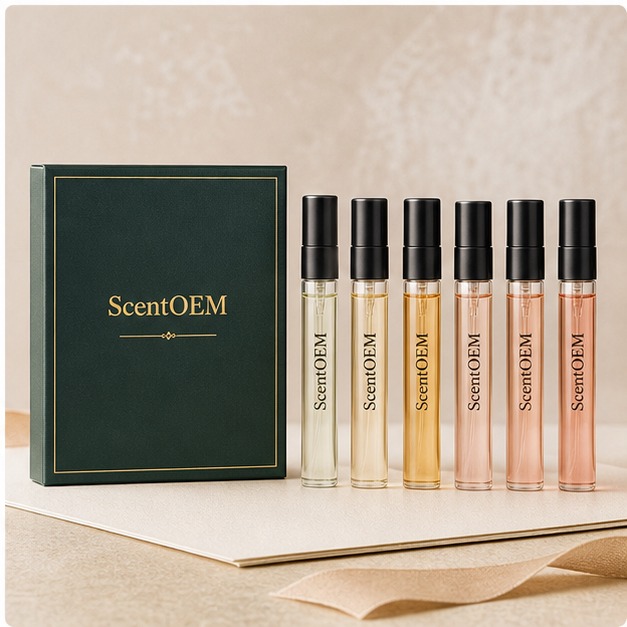
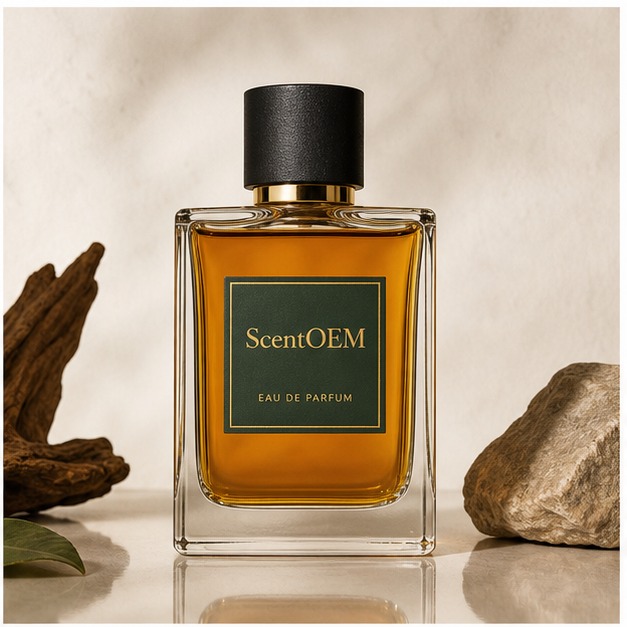
Buyers usually ask for "the MOQ" as if a perfume had one. It does not. A finished unit is an assembly of parts that come from different production processes, and each part carries its own minimum. The project minimum is set by whichever component in your specification has the highest one.
| Fragrance batch | Compounding runs to a batch size. The formula path — stock, adjusted or newly developed — changes how that batch is planned. |
|---|
| Bottle | An available bottle behaves differently from one requiring a custom mould. Mould work introduces both a setup cost and a much larger minimum. |
|---|
| Cap and atomizer | Standard components are easier to source in smaller quantities than bespoke closures or finishes. |
|---|
| Decoration | Printing, coating or other decoration is a separate process with its own setup and run minimum. |
|---|
| Label and retail box | Print runs have their own economics. Structural changes to a box are more significant than artwork changes. |
|---|
| Assembly and carton | Filling, assembly and master carton planning depend on the combination above rather than on any single part. |
|---|
This is why a single published MOQ figure would be misleading: it would either be wrong for most specifications, or set so high that it excludes projects that are actually feasible.
What the Unit Cost Is Made Of
Separating the parts makes it clearer which decisions actually move the number, and which feel significant but do not.
|
| | Cost Line | Driven By | Moves a Lot When |
|---|
| Fragrance concentrate | Formula composition, concentration and fill volume | Concentration rises or the formula uses costlier materials |
| Bottle | Availability, size, glass weight and finish | A custom mould replaces an available bottle |
| Cap and atomizer | Component selection and finish | A bespoke closure or surface treatment is specified |
| Decoration and label | Method, number of colours and coverage | Decoration method changes, or colours are added |
| Retail packaging | Box structure, material and finishing | Structure changes, or a gift set replaces a single unit |
| Filling and assembly | Component count and assembly complexity | More parts must be hand-assembled per unit |
| Master carton and freight | Weight, volume and destination | Fill volume, glass weight or destination changes |
| Documentation | Formula and destination-market requirements | A market requires files not already available |
Main Cost Drivers
| Formula path | Stock, semi-custom and custom development have different planning requirements. See OEM and ODM paths for how formula origin differs. |
|---|
| Packaging | Bottle, cap, decoration, label, retail box and gift set choices can change MOQ. Options are set out on packaging customization. |
|---|
| Market files | Documentation should be checked for the selected formula and destination market. See quality and documentation. |
|---|
| Quantity | Higher quantities may improve unit economics, but exact terms need commercial review. |
|---|
| Variant count | Each additional scent, fill volume or packaging version tends to carry its own component minimums rather than sharing one pool. |
|---|
MOQ Comparison by Project Path
|
| | Path | Best For | MOQ Logic | Cost Drivers | Quote Inputs |
|---|
| Wholesale | Distributors and repeat SKU buyers | Depends on selected SKU and packaging | Formula, fill volume, quantity and carton plan | Category, quantity, market and catalog interest |
| Private label | Brands and retailers needing branded packaging | Depends on bottle, label, box and decoration scope | Packaging components, artwork, printing and assembly | Logo, packaging needs, quantity and launch date |
| Semi-custom | Brands needing adjusted scent or package direction | Depends on available base direction and revision scope | Sample rounds, component fit and documentation review | Scent brief, target market and packaging requirements |
| Full custom | Brands needing a distinct scent profile | Depends on development path and commercial scope | Formula work, sample rounds, testing and ownership terms | Detailed brief, budget, market, quantity and schedule |
Levers That Move MOQ and Cost
If a first quotation comes back above budget, these are the adjustments that usually change it most. Each works by removing a component minimum or a setup step from the project.
|
| | Lever | What Changes | Trade-off to Weigh |
|---|
| Use an available bottle | Removes mould setup and its associated minimum | Less shelf differentiation from a bespoke silhouette |
| Simplify decoration | Fewer print or coating setups per unit | A simpler finish on shelf |
| Keep one fill volume | One bottle, one label size, one carton plan | No travel or discovery size at launch |
| Limit scent variants | Fewer separate fragrance batches | A narrower opening range |
| Accept a standard retail box | Avoids structural tooling and finishing setups | Less distinctive unboxing |
| Consolidate a launch | Component minimums spread across one larger order | More capital committed up front |
Costs Buyers Often Miss
These sit outside the per-unit price but land in the same budget. Leaving them out is the most common reason a project looks affordable and then does not close.
Sample rounds and revisions, especially where scent direction is still moving
Artwork preparation and rework when supplied files do not meet print requirements
Tooling, moulds or printing setup where a custom component is chosen
Documentation work for the destination market
Freight, insurance, duties and import handling to the delivery point
Ordering above your intended quantity because a component minimum requires it
What a Quote Needs From You
The gap between "we cannot quote yet" and a usable number is normally these inputs. Anything still undecided can be given as a range or an option.
| Commercial | Buyer type, destination market, intended quantity, target launch date and sales channel. |
|---|
| Product | Product category, fill volume, concentration preference and fragrance direction or reference. |
|---|
| Packaging | Bottle and cap preference, decoration method, label, retail box, gift set or carton requirements. |
|---|
| Compliance | Documentation expected for the destination market or sales platform. |
|---|
| Scope | Number of scent variants, number of fill volumes and whether a sample round is required first. |
|---|
The sampling sequence that follows is described on sample process.
Why No Universal Price Is Published
A fixed universal MOQ or price can mislead B2B buyers because perfume projects combine formula, packaging, decoration, documentation, shipping and commercial scope. ScentOEM reviews these inputs before quoting. A supplier who quotes a firm MOQ or unit price before knowing your bottle, decoration and destination is quoting a different project than yours — see trust evidence for how to test claims like that.
MOQ and Cost FAQ
Why is the minimum different for the bottle, the box and the fragrance?
Each part of a perfume comes from a different production process with its own economics. A printed retail box, a decorated bottle, a custom cap and a fragrance batch are made in different ways and carry different minimums. The project minimum ends up being set by whichever component in your chosen specification has the highest one.
Does a higher order quantity always reduce unit cost?
Higher quantities may improve unit economics, but not evenly and not without limit. Fixed setup items are spread over more units, while material and freight costs scale more directly. Exact terms need commercial review against the specific specification and quantity.
Which choices reduce the minimum most?
Generally: using an available bottle and cap rather than a custom mould, choosing a simpler decoration method, keeping to one fill volume, limiting the number of scent variants, and accepting a standard retail box. Each of these removes a component with its own minimum from the project.
Are sample and tooling costs part of the unit price?
They are usually separate. Sample rounds, artwork rework, and any tooling or printing setup are project costs rather than per-unit material costs, even though they affect the total budget. How they are treated is confirmed as part of quotation.
Does adding a second fill volume or scent variant change the minimum?
Usually yes. A second fill volume introduces a different bottle, label size and carton plan, and a second scent introduces a separate fragrance batch. Each variant tends to carry its own set of component minimums rather than sharing one pool.
Why can freight and documentation change the landed cost?
Fragrance products have shipping requirements that depend on the formula and destination, and the documents needed vary by market. Both are confirmed for the selected formula and destination rather than assumed, which is why a quotation separates ex-works scope from landed cost.
Continue From Here