What to Settle Before Contacting Anyone
Most first-time founders approach suppliers with a scent idea and a logo. Those are the two inputs that matter least at the outset, because neither constrains what can actually be produced.
Four decisions determine everything downstream, and they are commercial rather than creative:
| Who buys it | Not a demographic sketch — an identifiable group with a reason to buy fragrance from a brand they have not heard of. |
|---|
| Where they buy it | Own site, marketplace, retail shelf, social selling or wholesale. Each implies different packaging, margin structure and volume. |
|---|
| At what price | Retail price sets the manufacturing budget. Working backwards from it is the only reliable way to know what is affordable. |
|---|
| How many, realistically | The quantity you can actually sell and finance — not the quantity that produces an attractive unit cost. |
|---|
Every subsequent conversation depends on these. A supplier cannot usefully advise on formula path, bottle or packaging level without knowing the channel and price position, because those determine which options are viable at all.
Choosing the First Product Format
The format decision is frequently made by default — an EDP in a 50 ml bottle, because that is what perfume looks like. Several alternatives suit a first launch better, and the right choice depends on what the launch is meant to prove.
| Format | Suits | Consideration |
|---|
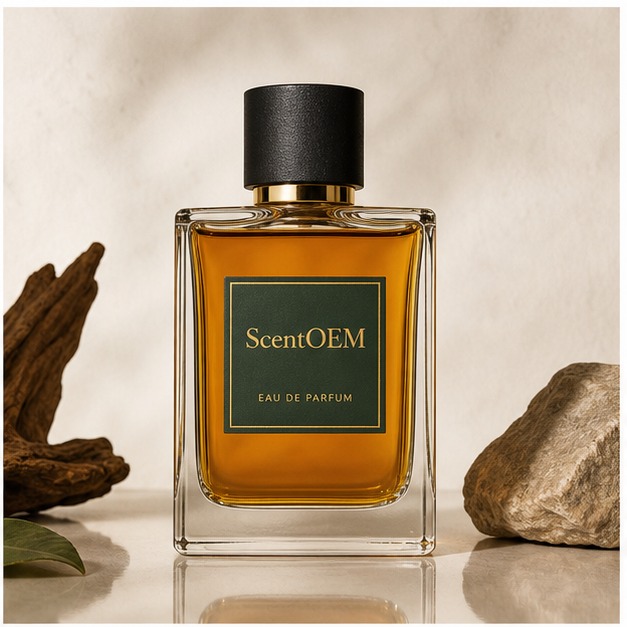
| EDP / EDT | Establishing a serious fragrance brand | Highest expectation on presentation; the reference format |
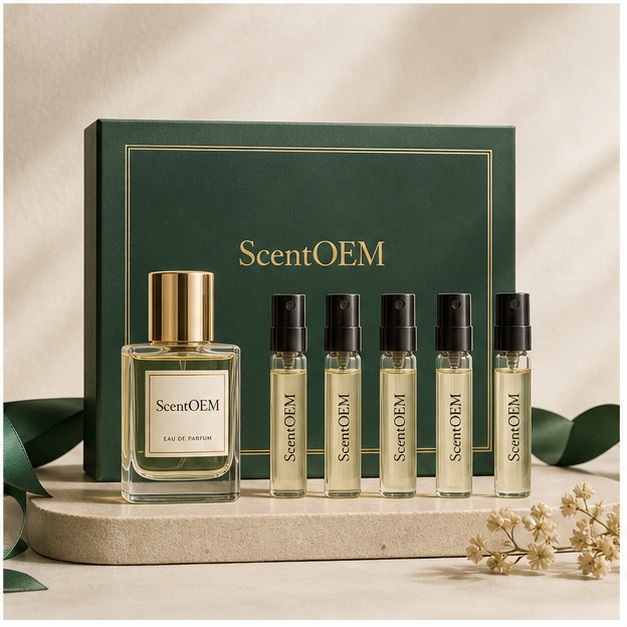
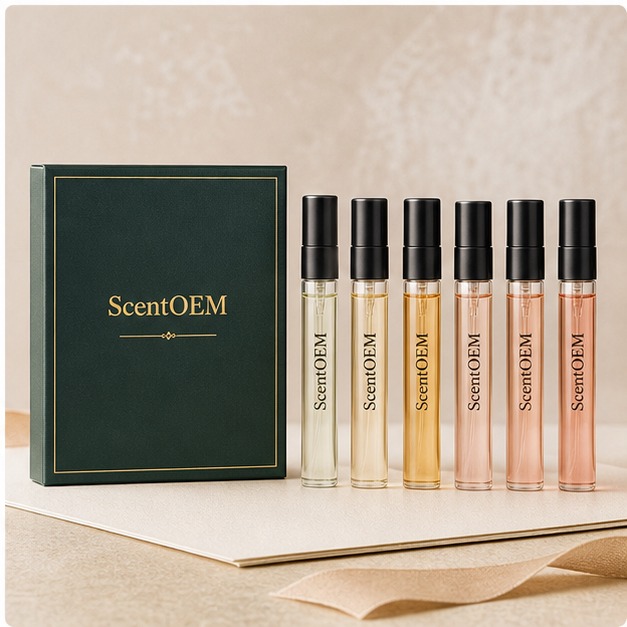
| Discovery set | Testing which of several directions resonates | Assembly adds cost; generates demand information |
| Mini / travel size | Low price entry, social selling, gifting | Lower unit price and a lower barrier to first purchase |
| Body mist | Lifestyle and beauty positioning, younger buyers | Lower price point, larger fill, different competitive set |
| Perfume oil / attar | Markets where oil-based fragrance is the norm | Alcohol-free positioning; different shipping profile |
| Gift set | Seasonal, corporate and hospitality channels | Presentation carries the value; assembly and box drive cost |
A discovery set as a first product is worth serious consideration. It costs more per unit to assemble, but it returns something a single SKU cannot: evidence about which fragrance direction your buyers actually choose, before you commit volume to one.
The Launch Sequence
The order matters because each step constrains the next. Reversing it is the most common source of rework.
- Define buyer, channel, price position and realistic quantity. Commercial before creative.
- Choose the product format that matches the channel and what the launch must prove.
- Choose the commercial path. Private label, semi-custom or full development — see the path comparison guide.
- Review fragrance directions, or prepare a scent brief if developing.
- Confirm the destination market before packaging design, because label requirements are a design input.
- Scope packaging — bottle, closure, decoration, label, retail box and carton, in that order.
- Prepare artwork once bottle and box are fixed, not before.
- Sample and evaluate against a written specification.
- Confirm documentation for the selected formula and destination.
- Quotation, production and export planning against an approved scope.
Steps 5 and 9 are the ones first-time founders most often defer, and they are the two that can invalidate work already paid for. Naming the destination market early costs nothing; discovering a labelling requirement after artwork approval costs a print run.
Where the Money Actually Goes
New founders typically budget for the fragrance and are surprised by everything else. The formula is rarely the largest line.
- Components — bottle, closure, atomizer and collar, each with its own minimum.
- Decoration setup — a separate setup cost per process, before any per-unit cost.
- Print runs — labels and boxes have their own economics independent of unit count.
- Assembly — filling, labelling, boxing and any set assembly is labour.
- Samples — a real cost across rounds, and one worth spending properly.
- Freight and duty — driven by carton volume and destination, not by product value alone.
- Documentation — where testing or filings are needed for the destination market.
- Working capital — the gap between paying for production and being paid by customers, which is what most often ends a promising first launch.
The cost mechanics behind the first four are set out in detail on the MOQ and cost guide.
Mistakes That Sink First Launches
- Commissioning a custom bottle mould for run one. The single most frequent reason a first-run budget is exhausted before launch. Distinctiveness is achievable through decoration and presentation on an available bottle.
- Launching too many SKUs. Component minimums apply per variant, so six scents multiply the floor and split the demand signal.
- Designing packaging before the market is named. Required label text differs by market and is designed in, not added on.
- Treating the scent as the whole product. Buyers encounter the bottle, the box and the spray before they encounter the fragrance.
- Ordering to reach a better unit price. Unsold stock is more expensive than a higher unit cost, and it consumes the capital needed for run two.
- Skipping the full presentation sample. Approving a filled bottle without the finished label and box means approving an incomplete product.
- Assuming compliance is the supplier's problem. In most markets the obligation sits with the entity placing the product on that market — usually you. See the documentation guide.
What to Prepare for a Supplier
A first message containing these turns an enquiry into a reviewable project and removes several rounds of clarification.
| Brand | Target buyer, price position, sales channel, destination market and launch timing. |
|---|
| Product | Category, fill volume, fragrance direction or reference, SKU count and quantity range. |
|---|
| Packaging | Presentation level, bottle references or inspiration images, and artwork readiness. |
|---|
| Commercial | Budget range per unit or in total, and whether the quantity is financed. |
|---|
| Documentation | Anything your importer, platform or retailer has already told you they require. |
|---|
Uncertainty is fine and worth stating. "We are between a 30 ml and 50 ml format and want to understand how that changes the minimum" is a productive message. A precise-sounding brief you have not actually committed to is less useful than an honest range.
Launch FAQ
How much does it cost to start a perfume brand?
No responsible figure can be published, because the total is driven by format, fill volume, formula path, packaging level, decoration, SKU count, quantity and destination market. Working backwards from your intended retail price and realistic first-run quantity produces a far more useful budget than any published average.
Should I start with private label or develop my own fragrance?
For a first launch, private label or semi-custom usually fits better. It keeps the minimum and the investment contained while the market is still unproven, and a second run can justify development on evidence. Full development suits a signature product with demand already established.
How many products should I launch with?
Fewer than most founders plan. Component minimums apply per variant, so each additional SKU raises the total floor and divides the demand signal. Two or three considered options, or a discovery set that tests several directions in one product, generally beats a broad opening range.
Do I need a custom bottle to look like a real brand?
No. Available bottles support a great deal of differentiation through colour, coating, closure choice and decoration. A custom mould introduces tooling cost and a substantially higher minimum, and is better commissioned once volume justifies it.
What is the first thing to decide?
Who buys it, through which channel, at what price, in what realistic quantity. Every technical decision that follows — formula path, bottle, decoration, packaging level — is constrained by those four answers.
Continue From Here