Quick answer
To verify a perfume factory in China, connect six things: the legal company, the production address, the people communicating with you, the equipment used for your order, the documents relevant to that site, and the bank account receiving payment. Then confirm those connections through public registration records, original documents, a live video walkthrough, representative samples and—when the order justifies it—an independent on-site audit.
A certificate, factory video or business license can support verification, but none of them proves the entire story alone. The strongest conclusion comes from several independent pieces of evidence that agree with one another.
What factory verification should establish
Verification is not a hunt for a single “real factory” badge. It is a structured attempt to answer four questions before money and intellectual property are exposed:
- Who is the legal counterparty?
- Where will the quoted work actually happen?
- Can that site perform and control the required process?
- Who is accountable if the finished product does not match the approved specification?
The answer may involve one company or several. Perfume projects often combine fragrance development, liquid production, glass, pumps, caps, decoration, printing, assembly and dangerous-goods shipping. A transparent partner can coordinate outside specialists. The risk begins when the relationship is hidden or the buyer assumes that every process shown in marketing material happens under one roof.
Step 1: identify every company in the transaction
Ask the supplier to provide the Chinese legal name and Unified Social Credit Code for each relevant entity. At minimum, identify the website operator, contracting party, manufacturing site, exporter and payment beneficiary.
Use a simple reconciliation table:
| Evidence | Name and address to compare |
|---|
| Business license | Registered company and address |
| Quotation | Seller or service provider |
| Supply contract | Party accepting obligations |
| Factory documents | Holder and site covered by the document |
| Commercial invoice | Seller/exporter |
| Bank account | Payment beneficiary |
| Product label or batch file | Manufacturer or responsible party where applicable |
Search the company through China’s National Enterprise Credit Information Publicity System. Review its registration status, legal representative, registered address and business scope. A valid registration proves that the company exists; it does not prove that it owns a specific factory or can manufacture the exact perfume product being quoted.
If an English name is used, ask the supplier to map it to the Chinese entity. English brand names are often not legal company names.
Step 2: connect the production site to the legal entity
Request the production address in Chinese and English. Compare it with the address shown on relevant documents and with the location used during a live walkthrough.
The registered office and production site may be different. That is not automatically a problem, but the relationship should be documented. If the manufacturer leases a facility, uses an affiliated company or subcontracts a stage, ask who operates the site and who carries responsibility for quality records and corrective action.
A useful address check includes:
- the full street address and building number;
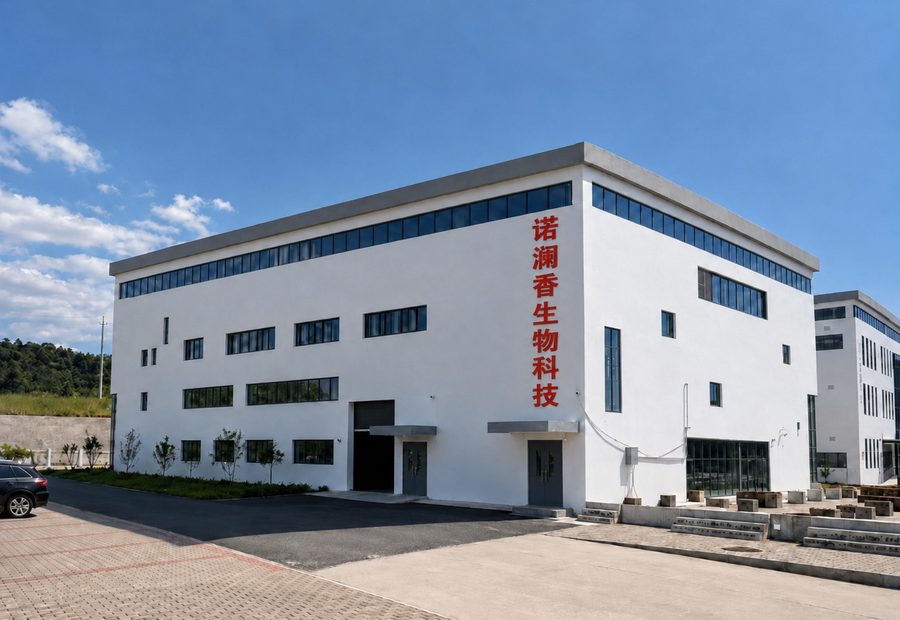
- exterior signage visible in a current video;
- the company name shown at reception or production entry;
- the address on relevant certificates or reports;
- the warehouse and production areas used for the quoted product;
- the name of any landlord, affiliate or subcontractor involved.
Do not rely only on map imagery. Industrial parks change, map pins can be inaccurate, and a sales office may be far from the production site.
Step 3: request a live walkthrough with a verification script
A prerecorded factory tour is easy to reuse. A live walkthrough is stronger because the buyer can ask the camera operator to move between specific locations and show current details.
Before the call, send a route rather than requesting a generic tour:
- exterior sign and entrance;
- reception and displayed business name;
- raw-material or bulk-liquid area relevant to perfume;
- compounding, filtration or holding equipment if included in scope;
- filling and pump-crimping line;
- labeling, coding and carton assembly;
- quality-control area and retained samples;
- finished-goods warehouse;
- a current date reference and the name of the host.
Ask the host to show equipment identification plates where safe and practical. Compare the equipment with the production steps described in the quotation. A general cosmetics workshop may not have the crimping tooling, ventilation, liquid-handling process or packaging setup needed for the specific order.
The walkthrough should not expose other customers’ confidential formulas, artwork or personal data. A supplier that protects customer confidentiality is showing a positive control, not avoiding verification.
Step 4: match documents to the quoted scope
Document review should answer “who, where, what and when.” A logo or certificate number without context is weak evidence.
For each document, record:
- holder name;
- site address;
- issuing organization;
- scope of activities or products;
- issue and expiry dates where applicable;
- document or report number;
- whether it is current, suspended, withdrawn or superseded;
- whether the quoted production stage falls inside the scope.
If the document was issued by a certification or testing organization, use the issuer’s official verification channel where available. If a supplier sends only a cropped image, request a readable copy with confidential information redacted rather than removed entirely.
Be precise about what a document proves. A quality-management certificate does not prove that every batch meets specification. A test report applies to the tested sample and stated method, not automatically to all products. An IFRA-related document concerns a fragrance mixture and intended use; it does not replace the finished-product safety assessment or destination-market obligations.
Step 5: verify the process used for your order
The factory may be genuine but still unsuitable for your project. Ask the supplier to map your order to a process flow and identify which steps are internal or outsourced.
| Project stage | Verification question |
|---|
| Fragrance selection | Who owns or supplies the fragrance mixture? |
| Formula preparation | Where is the finished bulk prepared and released? |
| Packaging procurement | Who buys and inspects bottles, pumps, caps and cartons? |
| Compatibility | Who tests formula-package interaction and spray performance? |
| Filling and crimping | Which line and tooling will be used? |
| Coding and assembly | How are batch codes, labels and cartons controlled? |
| Final inspection | Who defines the sample size and acceptance criteria? |
| Shipment release | Which records authorize dispatch? |
The goal is to locate responsibility. “We can do everything” is not a process map.
Step 6: test commercial consistency
Operational evidence should agree with commercial documents. Compare the names, addresses, product descriptions and scope across the quotation, pro forma invoice, contract and bank instructions.
Pause if:
- the payment account belongs to an unexplained individual or unrelated company;
- the seller refuses to put the actual manufacturer in writing;
- the product specification is missing from the contract;
- the quotation uses one entity while the invoice uses another without explanation;
- the beneficiary changes immediately before payment;
- the supplier pressures you to pay before resolving document mismatches.
A legitimate group structure may use several entities, but it should be able to explain the reason and document the relationship. Verification is not complete until the buyer understands whom it can hold accountable.
Step 7: use samples as verification evidence
Sampling verifies more than scent preference. It shows whether the supplier can translate a written brief into a controlled reference.
Request sample identification that includes the fragrance or formula code, version, concentration, date, packaging components and artwork version. When possible, retain one approved sample and ask the supplier to retain a matching reference.
Evaluate:
- scent direction and dry-down against the agreed brief;
- liquid color and clarity;
- fill level and visible contamination;
- pump output, spray pattern and leakage;
- crimp appearance and component fit;
- decoration alignment and adhesion;
- label and carton accuracy;
- protective packing for courier transport.
A good sample does not guarantee mass-production consistency, but an unidentified sample cannot function as a reliable approval standard. Use the ScentOEM sample-process guide to structure approval checkpoints.
Step 8: decide whether an independent audit is justified
Remote verification may be sufficient for an early sample or a low-exposure project. An independent audit or inspection becomes more valuable when the order is large, the formula or packaging is proprietary, the product will enter a regulated market, or the supplier relationship is strategically important.
Define the audit scope before commissioning it. A generic social-compliance audit may not assess perfume-specific equipment, component control or batch traceability. Ask the auditor to verify the legal entity, address, relevant process, equipment, staffing, material flow, quality records, subcontracting and corrective-action system.
An audit should produce findings, evidence and limitations. It should not be treated as a permanent guarantee. Sites, equipment, people and business relationships can change, so critical evidence needs a review date.
A practical evidence-strength ladder
Not all evidence has equal value. Use this ladder when deciding whether a claim is sufficiently supported.
| Strength | Example |
|---|
| Weak | Undated website statement or generic stock photo |
| Limited | Copy of a document with no issuer verification |
| Moderate | Readable current document matching the entity and address |
| Strong | Current document plus live site evidence and consistent commercial records |
| Very strong | Multiple consistent sources plus independent audit or inspection evidence |
Important decisions should not depend on a weak source. Factory ownership, product scope, certification and payment identity deserve stronger evidence than a general marketing statement.
Questions to ask before releasing a deposit
Use this final gate:
- Is the contracting company identified and active?
- Is the payment beneficiary explained and consistent?
- Is the production address known?
- Is the actual manufacturer disclosed?
- Are subcontracted stages listed?
- Do relevant documents match the company, address and scope?
- Has the quoted process been shown or independently checked?
- Is the approved specification attached to the commercial agreement?
- Are sample identity and revision status recorded?
- Are inspection rights, defects and remedies defined?
- Is ownership of molds, artwork, formulas and excess packaging clear?
- Are destination-market responsibilities assigned?
If several answers remain “unknown,” the project is not ready for a deposit.
How ScentOEM supports verification
ScentOEM operates as a B2B sourcing and project-coordination partner, not as an automatically presumed factory owner. Its role is to help buyers structure requirements, separate supplier roles, request relevant evidence and align the project before a manufacturing route is confirmed.
Review the Trust and Evidence framework or submit the known product, quantity, packaging and destination through the project request form. Verification conclusions must remain tied to current evidence and the exact supplier selected for the project.
Frequently asked questions
Does a Chinese business license prove that a supplier is a factory?
No. It proves the registered entity exists and provides information about its recorded scope. Factory ownership and operating capability require additional address, site, process and document evidence.
Can a live video replace a factory audit?
It can strengthen remote verification but may not replace an audit for high-risk or high-value orders. A live call shows selected areas at one moment; an audit can review records, systems and a defined sample of evidence.
What if the seller and manufacturer are different companies?
Ask for the relationship in writing and identify which party is responsible for production quality, documents, payment and remedies. The arrangement may be workable if it is transparent and contractually clear.
Should I trust certificates shown on a website?
Treat them as leads for verification. Request readable documents, match the holder and site, review the scope and dates, and confirm them with the issuer or official database when available.
When should verification be repeated?
Repeat critical checks before a major new order, after a long gap, when the legal entity or payment account changes, when production moves, or when the product scope changes materially.
Sources and further reading
Continue From Here