


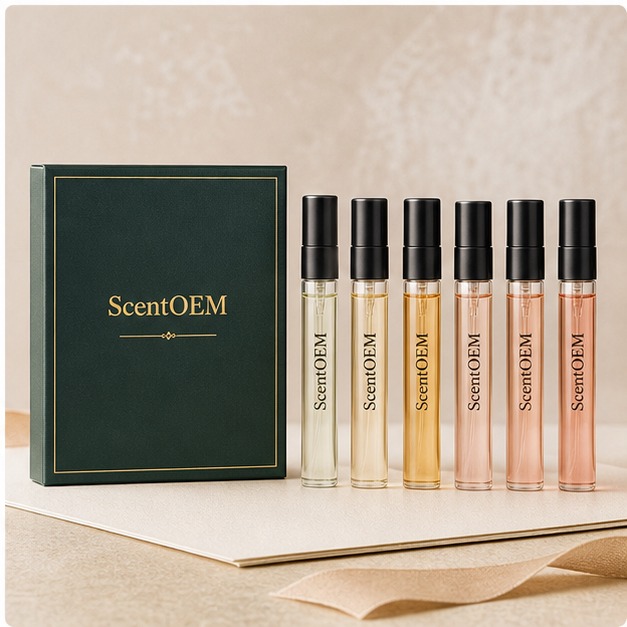
The lowest quoted unit price is often not the lowest-cost perfume project. One quotation may include a stock bottle and label; another may include bottle printing, custom boxes, compatibility testing and export packing. A third may quote 1,000 finished units while charging separately for 3,000 custom caps.
To compare a perfume OEM quotation cost breakdown, normalize product specification, quantity, quality scope, commercial basis and delivery terms before comparing totals.
Quick answer
Evaluate every quotation using three numbers:
- Production price per sellable unit for the same approved specification;
- Cash required for the first order, including development, tooling, component overage, tests and deposits; and
- Estimated landed cost per sellable unit, including freight, dangerous-goods handling, customs, duty, tax where applicable, inspection and expected loss.
Then compare non-price risks: sample quality, supplier verification, lead time, documentation, change control, defect remedy and reorder continuity.
Step 1: freeze the comparison specification
Quotes are comparable only when they describe the same product.
Create a one-page comparison header:
| Field | Base scenario |
|---|---|
| Number of fragrances | [To Confirm] |
| Units per SKU | [To Confirm] |
| Fill volume | [To Confirm] |
| Fragrance formula and dosage | [To Confirm] |
| Bottle and decoration | [To Confirm] |
| Pump, collar and cap | [To Confirm] |
| Box, insert and labels | [To Confirm] |
| Quality and testing scope | [To Confirm] |
| Required documents | [To Confirm] |
| Incoterm and named place | [To Confirm] |
| Currency and quote date | [To Confirm] |
If a supplier cannot offer the base scenario, record its proposal as an alternative. Do not silently replace the standard bottle, concentration or test plan in the main comparison.
Use the Perfume OEM RFQ Checklist to build the base request.
Step 2: separate recurring and one-time costs
Recurring product costs
These generally increase with units produced:
- fragrance compound;
- alcohol and base materials;
- bottle;
- pump and collar;
- cap;
- bottle decoration;
- labels;
- retail box and insert;
- filling, crimping and assembly;
-
retail and master-carton packing; and
-
routine batch quality control.
One-time or non-recurring costs
These may apply before the first order or when designs change:
- fragrance development;
- sample rounds and courier;
- bottle or cap mold;
- print plates, screens or dies;
- box cutting die;
- custom color matching;
- engineering or prototyping;
- artwork adaptation;
-
regulatory or safety review; and
-
project-specific testing.
Do not bury one-time costs in the first-order unit price unless every supplier uses the same treatment. Show both the cash expense and any amortized view separately.
Step 3: expose component purchase quantities
The requested finished quantity may differ from what the supplier must purchase.
Example structure:
| Item | Sellable units needed | Quantity purchased | Unit cost | Paid surplus |
|---|---|---|---|---|
| Filled perfume | 1,000 | 1,000 | [ ] | — |
| Bottle | 1,000 plus allowance | [ ] | [ ] | [ ] |
| Pump | 1,000 plus allowance | [ ] | [ ] | [ ] |
| Custom cap | 1,000 plus allowance | [ ] | [ ] | [ ] |
| Printed box | 1,000 plus allowance | [ ] | [ ] | [ ] |
For each surplus component, record:
- who paid for it;
- who owns it;
- where it is stored;
- condition and inventory reporting;
- storage fee;
-
future-use period; and
-
delivery or disposal terms.
A quote for 1,000 finished perfumes may require far more cash if a custom packaging component must be purchased at a higher minimum.
Read Why Packaging Components Often Set the Real Perfume MOQ for the component logic.
Step 4: compare fragrance on an identical basis
“EDP” does not establish equivalent fragrance cost. Confirm:
- exact formula or fragrance code;
- fragrance-compound dosage;
- calculation method;
- whether the approved sample is included in the quote;
- compound price basis;
-
sample and revision scope; and
-
treatment of reformulation or substitution.
One supplier can lower unit price by reducing dosage or selecting another compound. If that is a value-engineering option, label it clearly and require a new sample approval.
Step 5: normalize packaging quality
Packaging descriptions can hide significant differences.
Compare bottle:
- supplier and model;
- glass weight and dimensions;
- neck finish;
- stock color or custom coating;
- decoration process and number of colors;
-
decoration area and finish; and
-
defect standard.
Compare pump and cap:
- component model and material;
- finish;
- gasket and dip tube;
- crimp or fit system;
- spray expectation;
-
logo process; and
-
compatibility scope.
Compare box:
- structure and dimensions;
- board or substrate;
- insert;
- printing and colors;
- lamination, foil, embossing or other finishing;
-
quantity per artwork; and
-
packing configuration.
“Custom packaging included” is not a specification. Request drawings, samples and line items.
Step 6: price quality and documentation scope
Testing and evidence can appear as included, optional or absent.
Create rows for:
- fragrance evaluation samples;
- decorated packaging samples;
- pre-production sample;
- stability and compatibility testing;
- leakage and spray-function checks;
- pre-shipment inspection;
- third-party laboratory testing;
- batch COA or release report;
- IFRA conformity documentation;
- SDS;
- ingredient and allergen information;
-
manufacturing and GMP support; and
-
destination-market dossier inputs.
If Supplier A includes a defined test and Supplier B writes “standard QC,” the scopes are not equal. Ask Supplier B for the protocol and price of the missing work.
Documents should be identified by covered object, issuer and delivery timing. A generic PDF with no formula or batch link adds little value.
Step 7: put all quotes on one Incoterm
EXW, FOB, CIF and DDP-style offers allocate different costs and responsibilities. Even the same three-letter term is incomplete without a named place and current Incoterms edition in the contract.
Normalize the comparison to one commercial point, such as:
- ex-works at the identified manufacturing site;
- FOB at the named port, if operationally appropriate;
-
delivered to a named destination excluding duty and tax; or
-
total landed cost estimated for the importing entity.
Separate:
- factory-to-port movement;
- export customs;
- dangerous-goods documentation and handling;
- main freight;
- insurance;
- destination terminal charges;
- customs brokerage;
- duty and tax;
-
final delivery; and
-
storage or inspection contingencies.
Alcohol-based perfume freight should be validated with actual classification and pack-out. A general-cargo estimate is not a dependable landed-cost input.
Step 8: calculate the three comparison numbers
Production price per sellable unit
Use the cost of recurring product and manufacturing items divided by the number of accepted, sellable units delivered under the factory quotation basis.
First-order cash requirement
Add:
- production purchase;
- paid excess components;
- development and samples;
- tooling;
- testing and regulatory work;
- inspection;
- freight deposits and charges;
-
taxes or duties paid before sale; and
-
working-capital buffer.
This number matters to a startup more than an amortized theoretical price.
Estimated landed cost per sellable unit
A planning formula is:
(Production + allocated one-time costs + inspection + freight + insurance + customs costs + duty + nonrecoverable taxes + expected loss) ÷ expected sellable units received
Use separate scenarios rather than pretending uncertain values are exact. Record source, currency, exchange-rate assumption, tax treatment and date for every estimate.
Step 9: evaluate payment and currency exposure
Two identical totals can have different working-capital risk.
Compare:
- sample and tooling payment timing;
- production deposit;
- balance trigger;
- whether balance is due before or after inspection;
- accepted payment method;
- bank and transfer charges;
- currency;
- price-adjustment clause;
-
refund or cancellation treatment; and
-
ownership of work in progress and purchased components.
Avoid treating a supplier's favorable payment term as free financing. Evaluate enforceability, shipment control and relationship risk.
Step 10: price failure and change risk
The quotation should state what happens when reality differs from the specification.
Review:
- defective-unit remedy;
- inspection and claim window;
- replacement, rework or credit process;
- treatment of production overruns and underruns;
- responsibility for damaged tooling;
- obsolete paid materials;
- approved-substitution process;
- late-delivery consequences if negotiated;
-
cancellation stages; and
-
dispute mechanism.
A supplier with clearer change control and batch records can be lower risk even when the headline price is higher.
A normalized comparison table
| Comparison item | Supplier A | Supplier B | Supplier C |
|---|---|---|---|
| Same formula and dosage? | |||
| Same sellable units per SKU? | |||
| Recurring product subtotal | |||
| Paid component surplus | |||
| Development and samples | |||
| Tooling and setup | |||
| Testing and inspection | |||
| Documentation scope | |||
| Freight on normalized basis | |||
| Estimated duty/tax treatment | |||
| First-order cash requirement | |||
| Estimated landed cost/sellable unit | |||
| Estimated reorder cost | |||
| Earliest realistic cargo-ready range | |||
| Key exclusions and risks |
Keep factual evidence separate from judgment. A score for communication or risk should not overwrite the underlying cost rows.
Questions to return with a quotation
- Which exact sample and formula does this price cover?
- What dosage and fill tolerance are included?
- What is the legal seller and actual manufacturing site?
- Which packaging models, suppliers and finishes are quoted?
- What quantities will be purchased for each component?
- Who owns paid surplus and tooling?
- Which tests, inspection and documents are included?
- What is explicitly excluded?
- What Incoterm and named place apply?
- What dangerous-goods assumptions support freight?
- Which dates start only after approval or deposit?
- How long is the quote valid?
- What could cause the price to change?
- What remedy applies to confirmed nonconformity?
ScentOEM can help buyers obtain and normalize quotations as a sourcing and project-coordination partner. Supplier prices, capabilities, legal responsibilities and final commercial terms must be confirmed in the issued quotations and agreements.
Common mistakes
Dividing the invoice total by ordered units
This can ignore tooling, surplus components, freight, duty, defects and units retained for testing.
Comparing different Incoterms
A delivered price and an ex-works price allocate very different costs and risks.
Amortizing tooling but ignoring cash timing
Amortization helps long-term analysis; the startup still pays the initial amount before sales.
Treating missing tests as savings
If the test is necessary, add it back to the comparison rather than awarding the lower quote an artificial advantage.
Ignoring reorder economics
The first order may include tooling, while the reorder can be affected by component availability, new MOQs and material price changes. Compare both.
Frequently asked questions
What percentage of perfume cost is fragrance versus packaging?
There is no universal split. It depends on formula, dosage, bottle, cap, decoration, box, quantity and testing. Request component-level prices for the exact specification.
Should tooling be included in unit cost?
Show it both ways: as first-order cash and as an explicitly amortized planning scenario. Do not hide the original payment.
How do I compare a stock package with a custom package?
Treat them as separate product scenarios. Compare demand risk, cash, timing, unit cost, differentiation and reorder continuity—not only their unit prices.
Is DDP always the easiest quotation to compare?
Not necessarily. You still need to know the named place, importer arrangement, duty and tax treatment, dangerous-goods route and excluded charges. Have customs and legal parties verify the structure.
How accurate is landed cost before production?
It is an estimate until formula classification, final pack-out, route, freight rate, customs value and applicable taxes are confirmed. Use dated low/base/high scenarios.
Final takeaway
A useful perfume quote comparison makes differences visible. Freeze the product, separate recurring and one-time costs, expose packaging purchase quantities, normalize testing and Incoterms, and calculate both first-order cash and landed cost per sellable unit.
The winning supplier should be the best documented fit for the approved product and risk profile—not simply the smallest number in a unit-price column.