Why Oil-Based Fragrance Behaves Differently
An oil-based fragrance is not simply a perfume without alcohol. Removing the alcohol changes how the product is applied, how it develops and how it travels — and each difference has commercial consequences.
| Application | Applied directly to skin by roll-on, dab or wand rather than sprayed. The scent stays closer to the wearer instead of projecting outward. |
|---|
| Development | Without alcohol's flash-off, there is little of the sharp opening burst. The fragrance emerges more gradually and reads closer to the heart and base from the start. |
|---|
| Wear | Oil carriers hold aromatic materials against the skin, which typically extends wear relative to an alcohol spray of comparable strength. |
|---|
| Positioning | Alcohol-free positioning matters commercially in several markets, for reasons ranging from cultural preference to skin sensitivity. |
|---|
| Format | Sold in smaller volumes at higher concentration, which changes both the packaging set and the unit economics. |
|---|
| Transport | Generally a simpler shipping profile than alcohol-based fragrance — see the shipping guide. |
|---|
Perfume Oil, Attar and Concentrated Oil
These terms are used loosely across the trade, and buyers frequently mean different things by them. Worth settling early, because the brief depends on it.
| Term | Commonly means | Worth clarifying |
|---|
| Perfume oil | Fragrance concentrate in a carrier oil, applied to skin | Which carrier, and at what concentration |
| Attar | Traditionally a distilled natural oil; in modern trade often any oil-based fragrance in that style | Whether the brief means the traditional method or the style and format |
| Concentrated perfume oil | Higher concentrate proportion, less carrier | The intended concentration, since the term implies no fixed level |
| Alcohol-free perfume | Any fragrance without alcohol, including oil and water-based | Which base is actually intended |
| Solid perfume | Fragrance in a wax or balm base, in a tin or compact | A different production process from liquid oil |
If a brief specifies "attar", it is worth establishing whether the buyer means a traditionally distilled natural material — which carries very different sourcing, cost and availability characteristics — or an oil-based fragrance in that olfactive style. The two lead to different projects.
Where Oil Formats Lead the Market
Oil-based fragrance is not a niche substitute everywhere. In several markets it is the primary format, and a project targeting those markets may reasonably start here rather than with a spray.
- Gulf and wider Middle East — oud, amber, musk and rose directions in oil form are established mainstream products, often presented in decorative bottles with gift packaging. See the Middle East market page.
- Southeast Asia — roll-on formats suit humid conditions, travel use and social-commerce price points.
- Alcohol-free demand generally — a growing segment across markets, driven by both preference and skin sensitivity.
- Travel and pocket formats — small oil bottles are practical for carry, with fewer transport constraints than sprays.
- Layering ranges — oils suit brands built around combining scents rather than single signatures.
Formats and Applicators
The applicator is a more consequential decision than it appears, because it determines how the customer experiences the product and how much is used per application.
| Roll-on | A ball applicator in the neck. Controlled, familiar and travel-friendly. The most common retail format for perfume oil. |
|---|
| Dab / wand | A rod attached to the cap. Traditional in attar presentation and suited to more viscous oils. |
|---|
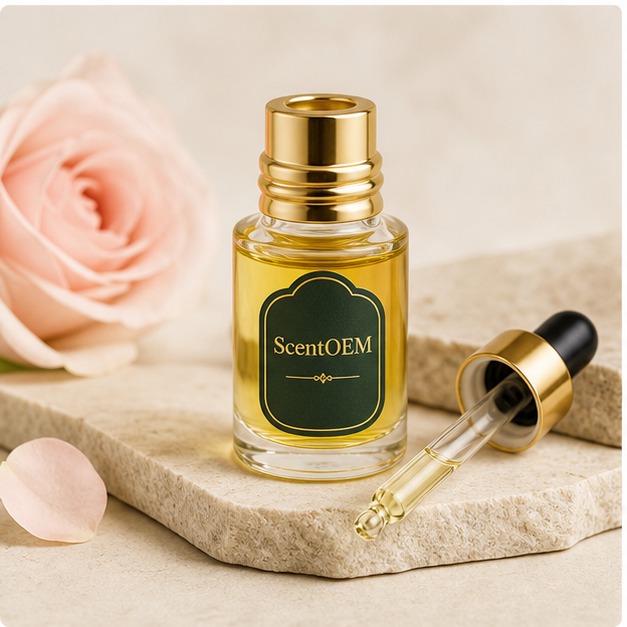
| Dropper | Precise dosing, associated with a more premium or apothecary style. |
|---|
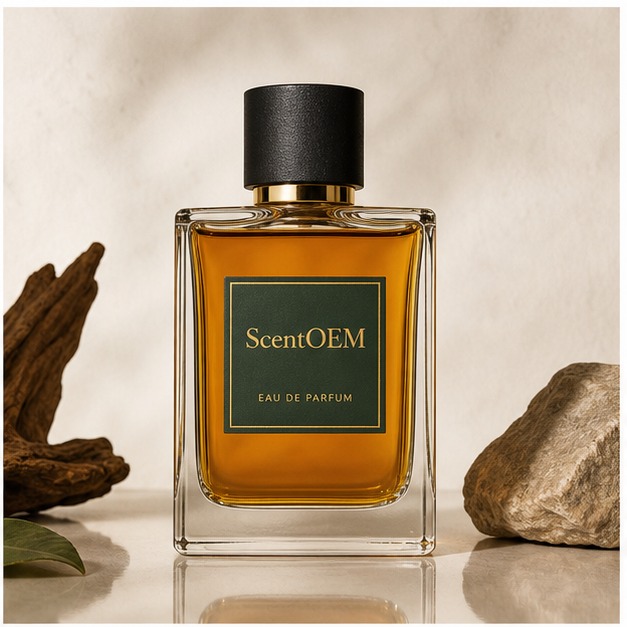
| Decorative bottle | Ornamental glass or metal, often with a wand. Presentation is a substantial part of the product's value in gift contexts. |
|---|
| Compact or tin | For solid formats, using a wax or balm base rather than liquid oil. |
|---|
Applicator choice interacts with the formula: viscosity affects how a roll-on ball performs, and this is confirmed on the actual selected combination during sampling rather than predicted from a specification.
The Logistics Advantage
One practical reason to consider an oil format is that it generally moves more easily than alcohol-based fragrance. Alcohol-based products are classified for transport, which narrows carrier and route options, particularly by air and for express courier.
For projects where the market accepts either format, this can affect:
- Sample shipping — often simpler and faster, which shortens the review cycle.
- Air freight availability — fewer carrier constraints where timing matters.
- Ecommerce fulfilment — some carriers and platforms handle non-alcohol fragrance more readily.
- Freight cost — small oil bottles are compact, and freight is usually charged on volume.
Whether a specific formulation falls into a given transport classification is confirmed for that formula rather than assumed from the product category. Import eligibility is a separate question from transport, and is usually determined by the destination market's rules and the importer's position.
What Can Be Customized
| Product | Oil profile, fragrance direction, concentration, carrier preference, roll-on or bottle format and fill volume. |
|---|
| Packaging | Small bottle, cap, applicator, label, box, insert and display packaging. Decorative and gift presentations are common in this category. |
|---|
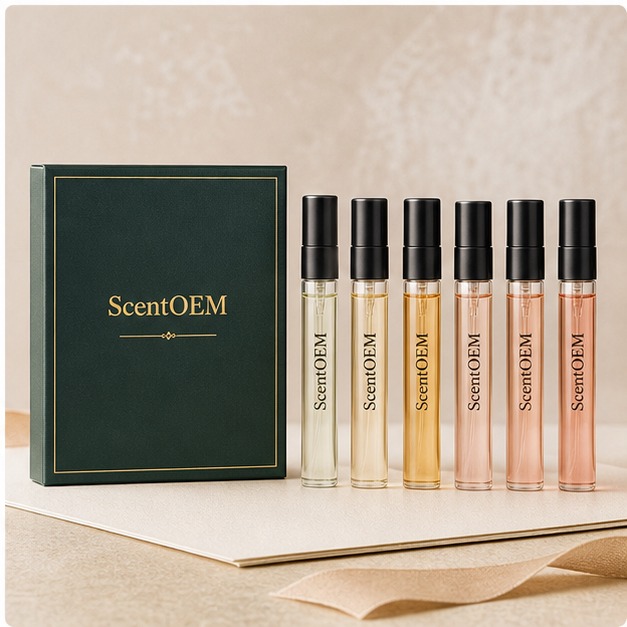
| Sets | Multi-scent collections, layering ranges and gift boxes combining several oils. |
|---|
| Review | Alcohol-free positioning, document availability, formula suitability and destination-market requirements. |
|---|
Alcohol-free positioning, formula suitability and documentation must be confirmed by the selected product and market rather than claimed in general.
Perfume Oil FAQ
Does perfume oil last longer than alcohol-based perfume?
Typically yes on skin. Oil carriers hold aromatic materials against the skin rather than flashing off as alcohol does, which usually extends wear. The trade-off is projection: oil-based fragrance stays closer to the wearer instead of filling a room.
What is the difference between attar and perfume oil?
Traditionally attar refers to a distilled natural oil, while perfume oil describes fragrance concentrate in a carrier. In modern trade the terms are often used interchangeably for oil-based fragrance in that style. Worth clarifying in a brief, because traditional distilled materials carry very different sourcing, cost and availability characteristics.
Is perfume oil easier to ship internationally?
Generally the transport profile is simpler, because alcohol-based fragrance is classified for transport in a way that narrows carrier and route options, especially by air and express courier. Whether a specific formulation falls into a given classification is confirmed per formula, and import eligibility remains a separate question.
Can perfume oil be sold as alcohol-free?
Alcohol-free positioning depends on the actual formulation, including the carrier and any solubilisers used. It is confirmed for the selected formula and destination market rather than assumed from the product category, since labelling claims are regulated in most markets.
Which applicator suits a retail perfume oil?
Roll-on is the most common for retail, being controlled, familiar and travel-friendly. Wand and dropper formats suit traditional or premium presentations. Applicator performance interacts with formula viscosity, which is confirmed during sampling on the actual combination.
Continue From Here