A Fragrance Market With Its Own Logic
Brands entering the Gulf and wider Middle East often arrive with a Western product plan and adjust it afterwards. It is usually more efficient to design for the market from the start, because several assumptions that hold elsewhere do not hold here.
| Fragrance is not a niche purchase | Perfume use is frequent, everyday and often layered. Consumption per person is high by global standards, and buyers are knowledgeable. |
|---|
| Concentration expectations run higher | Depth and longevity are valued. A light formulation that satisfies a European brief may read as insubstantial here. |
|---|
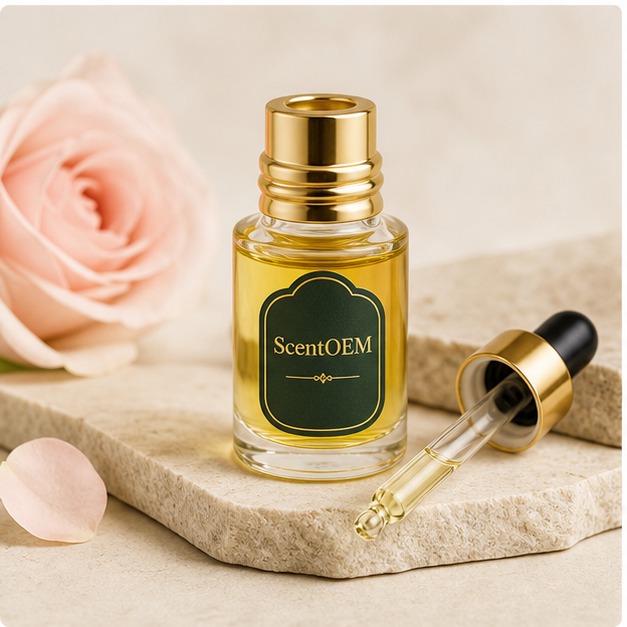
| Oil formats are mainstream | Perfume oil and attar are established retail products, not alternatives for a minority. See perfume oil and attar. |
|---|
| Presentation carries real weight | Bottle, cap and box are part of the product's standing, particularly where fragrance functions as a gift. |
|---|
| Layering is common practice | Ranges designed to combine — oil under a spray, a mist over both — suit established habits. |
|---|
Product Directions That Lead
These are the olfactive families that come up most often in Middle East briefs. They are starting points for discussion rather than a fixed catalogue.
| Direction | Character | Typical use |
|---|
| Oud | Deep, resinous, woody. The category's reference note. | Premium positioning, evening and occasion wear, gifting |
| Amber | Warm, resinous, enveloping | Broad appeal across price tiers |
| Musk | Soft, skin-like, long-wearing | Everyday wear and layering bases |
| Rose | Rich floral, frequently paired with oud | Women's lines and combination accords |
| Saffron and spice | Warm, distinctive, regionally resonant | Signature and niche positioning |
| Bakhoor-adjacent | Smoky, incense-like | Home fragrance and traditional occasions |
Oud briefs are worth clarifying early. The term covers everything from natural oud oil — a rare and costly material — to synthetic reconstructions and oud-inspired accords. The three sit at very different cost and availability points, and a brief that does not distinguish between them cannot be quoted accurately.
Format Expectations
- Perfume oil and attar — mainstream retail products, commonly in decorative bottles with wand or roll-on applicators.
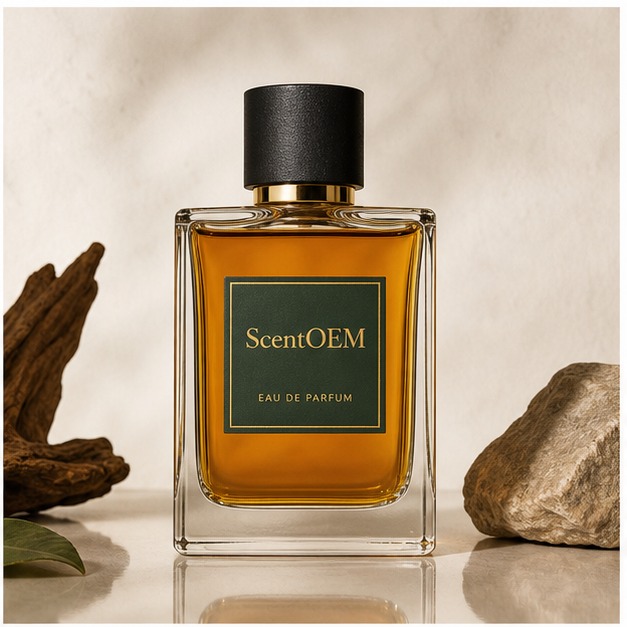
- Higher-concentration sprays — EDP and extrait tend to suit expectations better than lighter concentrations for occasion wear.
- Lighter formats for daytime — EDT and mist have a place in heat, alongside richer evening products.
- Home fragrance — incense-adjacent and warm resinous directions for room products.
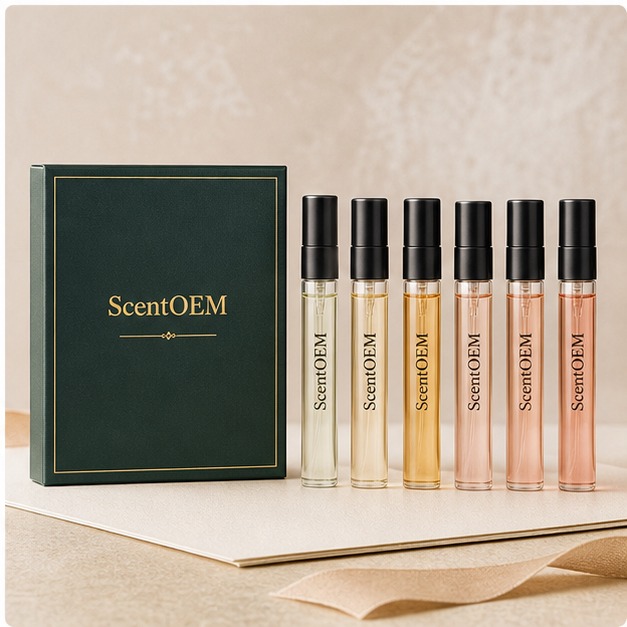
- Gift sets — a substantial category rather than a seasonal add-on. See gift sets.
- Layering ranges — products designed to be worn together rather than as single signatures.
Presentation and Gifting
Packaging expectations in this market are generally higher than in equivalent price tiers elsewhere, and presentation influences purchase more directly.
| Bottle and cap | Weight, finish and closure quality register immediately. A substantial cap does disproportionate work for perceived value. |
|---|
| Decoration | Metallic finishes, coating and hot stamping are conventional rather than premium exceptions. |
|---|
| Rigid boxes | Widely expected at gift positioning, where a folding carton might suffice in other markets. |
|---|
| Sets and collections | Multi-piece presentations suit both retail and gifting occasions. |
|---|
| Arabic on pack | Frequently expected commercially, separate from any regulatory requirement. Confirm with your importer what is needed and reserve label space for it from the first layout. |
|---|
What the Climate Changes
Sustained high temperatures affect fragrance products in transit, in storage and in use, and this is a specification input rather than an afterthought.
- Projection is amplified. Heat increases evaporation, so a formulation calibrated for a temperate market can read as overpowering in daytime use.
- Transit and storage conditions matter. Container and warehouse temperatures should be part of the packaging and logistics discussion.
- Component behaviour — adhesives, closures and some decorative finishes are affected by sustained heat; this is confirmed on the selected combination during sampling.
- Lighter daytime products have a genuine role alongside richer evening formats, rather than being a concession.
- Oil formats hold up well in heat and suit carry, which is part of their standing in the market.
Inquiry Inputs to Confirm
| Buyer type | Distributor, private label brand, retailer, gift buyer or ecommerce seller. |
|---|
| Country and channel | Requirements and buying patterns differ across the region. Name the specific country and who acts as importer. |
|---|
| Product | Format, concentration, fragrance direction — and for oud briefs, which material is intended. |
|---|
| Packaging | Premium cap, bottle finish, rigid box, gift set, insert and carton requirements. |
|---|
| Label content | Whether Arabic text is required, and what your importer specifies for the destination. |
|---|
| Documents | Formula and destination-market documents, confirmed for the selected product. |
|---|
Import requirements, registration obligations and labelling rules differ by country within the region and change over time. They are confirmed for the specific product and destination — and the authoritative source is usually your importer or a local advisor, who carries the obligations in that market. This page describes product and commercial direction, not regulatory guidance. See the documentation guide.
Middle East FAQ
Why do Middle East briefs favour higher concentrations?
Depth and longevity are valued in a market where fragrance is used frequently and often layered, and where occasion wear carries real social weight. A formulation calibrated for a temperate market can read as insubstantial. That said, lighter formats have a genuine daytime role, since heat amplifies projection.
What should an oud brief specify?
Which material is intended. "Oud" covers natural oud oil — a rare and costly material — as well as synthetic reconstructions and oud-inspired accords. The three differ substantially in cost, availability and character, and a brief that does not distinguish between them cannot be quoted accurately.
Is perfume oil a niche product in this market?
No. Perfume oil and attar are mainstream retail formats across the region, commonly sold in decorative bottles with wand or roll-on applicators. For many projects targeting the market, an oil format is a reasonable starting point rather than an alternative.
Does packaging need Arabic text?
Arabic on pack is frequently expected commercially, and separately there may be labelling requirements depending on the destination country. Both are confirmed with your importer for the specific market. Either way, reserve label space from the first layout rather than adding text to a finished design.
Are import requirements the same across the region?
No. Requirements, registration obligations and labelling rules differ by country and change over time. They are confirmed for the specific product and destination, and your importer or a local advisor is usually the authoritative source, since the obligations generally rest with the entity placing the product on that market.
Continue From Here