
Blog
How to Brief a Custom Perfume Manufacturer in China
Build a production-ready custom perfume brief covering audience, scent direction, concentration, packaging, quantity, market, approvals, ownership and timeline.
Quick answer
A useful custom perfume brief tells the manufacturer who the product is for, how it should smell and perform, which references are directional rather than copies, what concentration and packaging are intended, where the product will be sold, how many units are planned, who approves samples and which formula or exclusivity rights are required. The brief should define a decision framework—not demand a “1:1 copy” of another brand.
The better the brief, the more useful the first sample round becomes. A vague request creates broad interpretations, extra revisions and quotations that cannot be compared.
Start with the customer problem
Do not begin with a list of notes alone. Explain the role the fragrance will play for the intended customer.
Useful positioning inputs include:
- target customer and purchase occasion;
- retail channel and price position;
- brand personality and visual language;
- climate, season or wearing context;
- desired emotional effect;
- products the fragrance will sit beside;
- reasons a customer should choose it.
“A confident evening fragrance for a premium men’s collection sold in the Gulf” gives the development team more direction than “woody, sexy and long-lasting.”
Avoid demographic stereotypes as a substitute for insight. Explain the behavior, occasion and brand promise.
Describe scent direction in layers
Use several types of input rather than relying on a single reference perfume.
Olfactive family
Identify the broad family: floral, woody, amber, citrus, aromatic, gourmand, green, aquatic, fruity, musky or another direction.
Opening, heart and dry-down
Describe the desired development over time. Which impression should appear first? What should define the center? What should remain on skin or fabric?
Texture and mood
Words such as transparent, creamy, dry, sparkling, dense, smoky, clean, mineral or velvety can help a perfumer interpret the brief.
Include and avoid
List notes, effects or materials that are welcome and those that conflict with the concept. Explain whether the restriction comes from brand preference, target market, cost or another requirement.
References
Provide several references and explain what you like about each. One may show the opening, another the texture and another the level of sweetness. References are directional. They should not be instructions to copy protected branding or reproduce another product exactly.
Define performance without vague superlatives
“Very strong and lasts all day” is not a measurable specification. Explain the intended use and evaluation conditions.
Discuss:
- product format: EDP, EDT, extrait, oil or mist;
- application area and consumer use;
- desired projection profile;
- desired dry-down character;
- climate and storage conditions relevant to the market;
- packaging delivery system and spray behavior;
- target cost and concentration constraints;
- how the evaluation panel will test samples.
Performance depends on formula, concentration, materials, application, skin, environment and consumer perception. The development team can optimize toward a target, but marketing language should not become an unsupported technical guarantee.
Include commercial boundaries early
A fragrance cannot be developed independently of the product economics. Share the planned bottle size, quantity per scent, number of scents, target factory-cost range if approved, and intended packaging route.
| Commercial input | Why it affects development |
|---|---|
| Quantity per scent | Influences batch, component and development route |
| Target market | Affects documentation and product review |
| Bottle size | Changes fill, usage and cost structure |
| Concentration | Affects formula planning and finished-product cost |
| Packaging complexity | Changes timeline and cash exposure |
| Launch date | Determines feasible development and approval path |
| Reorder plan | Influences formula and component continuity decisions |
If cost has not been approved, mark it “To Confirm.” Do not ask the supplier to hide costs inside an undefined brief.
Define the packaging context
Fragrance development and packaging development should communicate. The bottle, pump, seal, cap and decoration affect how the product is filled, sprayed, handled and perceived.
The brief should state:
- intended bottle size and neck system;
- stock or custom bottle preference;
- pump output or spray character requiring review;
- decoration and color direction;
- cap material and fit;
- carton structure and finish;
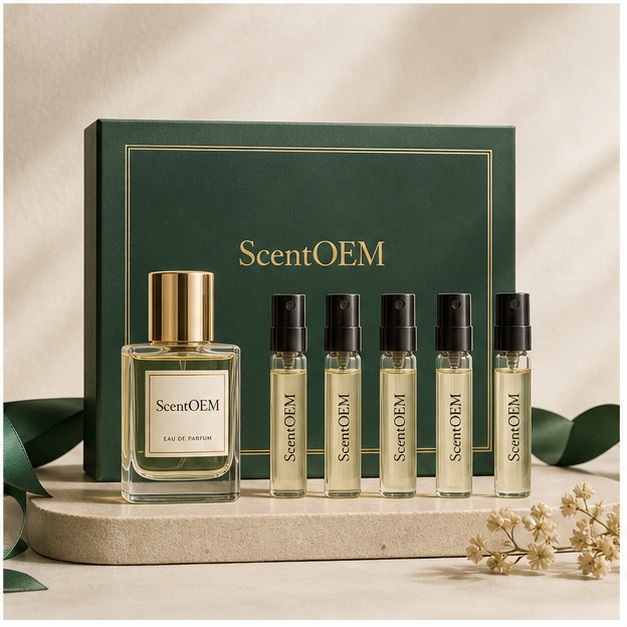
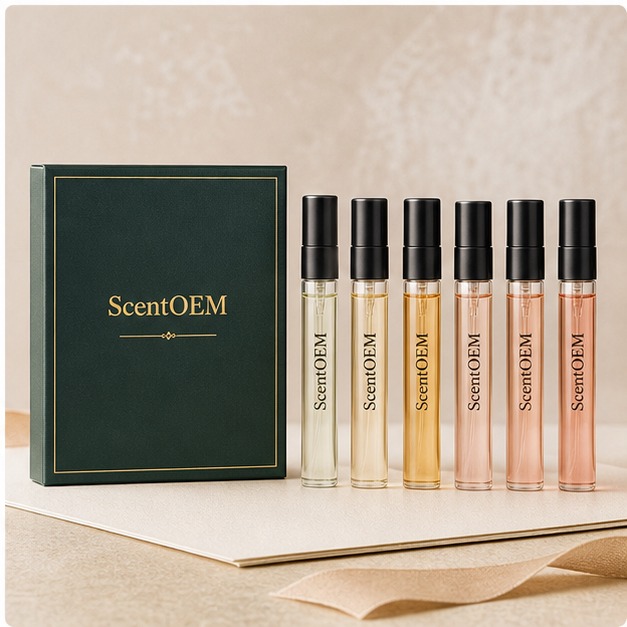
- discovery-set or sample format;
- whether components are buyer-supplied.
If the package is not selected, request compatible stock routes rather than approving a formula in isolation. See Packaging Customization for the major component decisions.
State destination and documentation needs
The manufacturer needs to know where the product will be sold. Destination affects labeling, responsible-party work, documentation, freight and sometimes the formula review.
List:
- first launch country or region;
- planned future markets;
- importer, distributor or responsible-person status;
- languages expected on label or carton;
- documents the buyer or advisor expects to review;
- dangerous-goods shipping route under consideration;
- any retailer or marketplace requirements already known.
Do not ask a manufacturer for a blanket promise that one document set makes the product compliant everywhere. Market responsibilities should be reviewed by qualified professionals.
Control the sampling process
Define how the team will evaluate samples before the first sample is made.
A practical plan includes:
- number of initial fragrance directions;
- sample format and concentration;
- quantity supplied for evaluation;
- evaluation period;
- named decision maker;
- consolidated feedback format;
- included revision rounds;
- criteria for selecting, revising or rejecting a direction;
- point at which packaging compatibility work begins;
- final approval record and retained sample.
Too many reviewers giving separate feedback can make the fragrance worse, not better. Appoint one person to consolidate comments and connect every requested change to the original brief.
Clarify formula rights before development
Custom does not automatically mean buyer-owned. Ask the supplier to define:
- who owns the fragrance formula;
- whether the buyer receives the formula or only a right to purchase it;
- whether the supplier may offer it to other brands;
- whether exclusivity is available;
- which territory, channel and term exclusivity covers;
- minimum purchases required to maintain exclusivity;
- who owns modifications and development records;
- what happens if production moves to another supplier.
Also address NDA, reference-product handling, artwork and packaging IP. Important terms require qualified legal review.
A one-page custom fragrance brief template
Brand and customer
- Brand:
- Target customer:
- Sales channel:
- Price position:
- Wearing occasion:
- Brand promise:
Fragrance direction
- Olfactive family:
- Opening:
- Heart:
- Dry-down:
- Mood and texture:
- Include:
- Avoid:
- References and what each reference demonstrates:
Product and packaging
- Format and concentration direction:
- Bottle size:
- Bottle/pump/cap route:
- Decoration:
- Carton:
- Number of scents:
- Quantity per scent:
Market and project
- Destination:
- Target launch date:
- Sample deadline:
- Decision maker:
- Documentation expectations:
- Formula/exclusivity requirement:
- Budget or cost boundary: To Confirm unless approved
How to score the first sample round
Use the same scorecard for every direction.
| Dimension | Question |
|---|---|
| Brief fit | Does it solve the stated customer and occasion problem? |
| Opening | Does the first impression match the desired character? |
| Development | Does the fragrance evolve coherently? |
| Dry-down | Is the remaining character suitable for the brand? |
| Distinctiveness | Is it recognizably positioned without copying a reference? |
| Commercial fit | Can the direction work within concentration and cost constraints? |
| Market fit | Does the review team identify any destination concerns for follow-up? |
| Packaging fit | Is the formula ready for compatibility work with the selected pack? |
Write specific feedback. “Make it more luxurious” is weak. “Reduce the sharp citrus opening and increase the dry, woody character in the dry-down” gives the development team an actionable direction.
Common briefing mistakes
- Requesting a copy of a famous perfume instead of defining a brand direction.
- Using only note names without customer, mood or commercial context.
- Hiding the target quantity until after development.
- Selecting custom packaging without checking MOQ and schedule.
- Letting several reviewers send contradictory feedback.
- Assuming custom means exclusive or buyer-owned.
- Approving a fragrance before defining the intended concentration and package.
- Treating a sample-vial approval as finished-product approval.
- Adding target markets late in the project.
How ScentOEM supports custom projects
ScentOEM works as a B2B sourcing and project-coordination partner. It can help structure the brief, organize fragrance and packaging decisions, and prepare a project for supplier review. The final formulation, ownership terms, MOQ, testing, timing and document availability depend on the selected development and manufacturing route.
Review Custom Fragrance Development, Private Label vs Custom Perfume and the Sample Process, then submit a project request.
Frequently asked questions
Can I send a reference perfume?
Yes, as a directional reference where legally and commercially appropriate. Explain which features matter. Do not request counterfeit branding or an unauthorized exact copy.
How many fragrance directions should I request?
Enough to explore clearly different interpretations without creating decision overload. The number should be agreed with the developer and linked to the brief and fee.
Does a custom fragrance require a custom bottle?
No. A custom fragrance can use a stock bottle. This often protects budget and quantity while preserving differentiation in the scent and brand design.
When should packaging be selected?
Begin packaging planning early and confirm the final package before compatibility and production approval. Formula and package decisions should not remain isolated.
Who should approve the scent?
Name one decision owner who consolidates customer, brand, commercial and technical feedback. Approval by an undefined committee causes repeated revisions.
Sources and further reading
- ScentOEM Custom Fragrance Development
- ScentOEM Private Label vs Custom Perfume
- ScentOEM Sample Process
- ScentOEM Packaging Customization
Evidence boundary: The links above describe ScentOEM's planning process; they are not independent evidence of formulation capability, customer results or product compliance. Save a versioned brief, written quotation, sample decision log and agreed ownership terms before approving development.
Send your project brief for scope review. Include the destination, intended format, packaging, quantity range and unresolved decisions. Do not send confidential formulas before a secure exchange and any required agreement are arranged.
Editorial note: AI tools assisted with drafting. This article is a general project-planning checklist under the editorial and corrections policy; no completed technical or legal review is documented on this page. Formula feasibility, ownership, IFRA suitability, alcohol content, supplier disclosures and destination rules require qualified human review for the actual project. This article does not grant product or market approval.