Why Mini Formats Sell
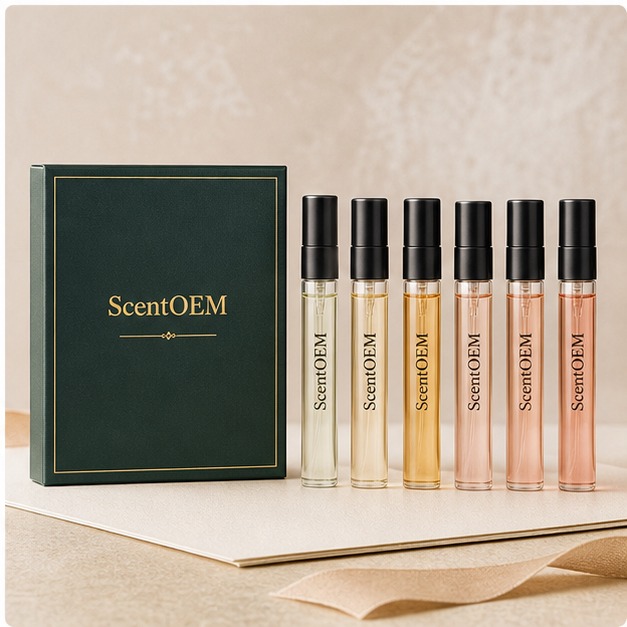
A mini is not a reduced version of the real product. Commercially it is a different product solving a different problem, and treating it as an afterthought of the full-size line usually wastes its advantage.
| Lower entry price | The single largest barrier to trying an unfamiliar brand is the cost of committing to a full bottle. A mini removes it. |
|---|
| Portability | Handbag, travel and desk use. Customers who own the full size frequently buy a mini as a second purchase for carrying. |
|---|
| Gifting and add-on | An accessible price point that works as an impulse purchase or a bundle addition. |
|---|
| Social commerce | Price points that convert on short-form video and creator-led selling, where a full-bottle price often will not. |
|---|
| Range testing | Several directions can be offered without committing full-size volume to each. |
|---|
The repeat-purchase behaviour is worth noting: a customer who buys a mini and likes it commonly returns for the full size, then buys further minis for carrying. The format supports the range rather than cannibalising it.
Channels Where Minis Lead
- Social and creator-led selling — the price point suits impulse conversion, and small parcels keep fulfilment costs workable.
- Travel retail and travel-size ranges — carry-on convenience is the whole proposition.
- Retail counters and checkout — a low-price impulse item beside a full-size display.
- Ecommerce bundles — raising basket value without raising the customer's risk.
- Corporate gifting at volume — a recognisable branded product at a per-head cost that scales.
- Subscription and sampling programmes — a recurring format need rather than a one-off order.
Where a set of several minis is the product itself rather than individual units, the structure and economics differ — see discovery sets.
Format Options
| Mini spray | A small atomizer bottle. Reproduces the full-size experience including spray behaviour. The most common retail mini. |
|---|
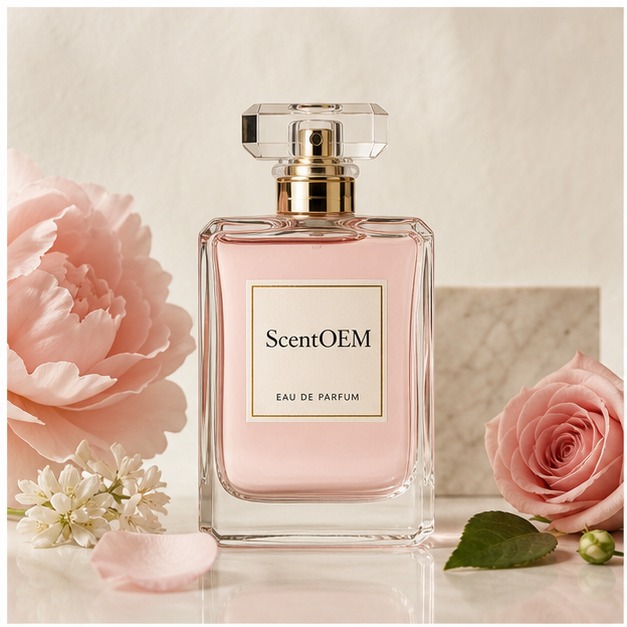
| Small bottle | A miniature of the retail bottle. Strongest brand consistency and gift value; higher component cost. |
|---|
| Sample vial | Lowest cost, usually dab application. Suits seeding and inserts rather than standalone retail. |
|---|
| Roll-on | For oil-based ranges. Travel-friendly and familiar where oil formats lead. |
|---|
| Refillable atomizer | Sold empty or filled, positioned around reuse. A different proposition from a disposable mini. |
|---|
| Solid or balm | In a tin or compact. No liquid, which simplifies carry and transport. |
|---|
Constraints of Working Small
Small formats introduce practical limits that do not apply at full size, and they are easier to design around than to fix later.
- Label area is severely limited. Required market text — ingredient declaration, volume, responsible entity — competes with brand design on a very small surface. This is a layout constraint from the first draft, not a finishing detail.
- Fine detail may not reproduce. Small type and hairline rules have practical limits, particularly with hot stamping or screen printing.
- Packaging is a larger share of unit cost. With little liquid, components and decoration dominate the economics.
- Filling accuracy matters proportionally more. A small variance is a larger percentage of a small fill.
- Component availability is narrower at very small capacities, which can push a project toward custom tooling for no commercial gain.
- Unit handling costs rise. Labelling, boxing and packing small items is more handling per unit of value.
The label constraint is the one most often discovered late. Confirming required destination-market text before the label is designed avoids a layout that has no room for it — see the artwork guide.
What to Confirm
| Format | Mini spray, small bottle, vial, roll-on, refillable or set structure, and fill volume. |
|---|
| Packaging | Small label, card, tray, box, sleeve, barcode and carton plan. |
|---|
| Relationship to range | Whether the mini must match an existing full-size product in formula, concentration and appearance. |
|---|
| Review | Fragrance count, quantity range, sample plan and destination requirements. |
|---|
Component availability, filling method and packaging feasibility are reviewed by project scope rather than promised in advance.
Mini Format FAQ
Will selling minis cannibalise full-size sales?
Generally the opposite. Minis lower the barrier to a first purchase from an unfamiliar brand, and customers who like the product commonly return for the full size, then buy further minis for carrying. The format tends to support the range rather than replace it.
Does a mini need to match the full-size formula exactly?
If the mini is meant to sell the full size, yes — including concentration. A customer who samples an EDT and receives an EDP has effectively received a different product, and the mismatch undermines the trial's purpose.
Why is a mini not proportionally cheaper than a full bottle?
Because most of the cost is not liquid. Bottle, closure, label, decoration and handling apply per unit regardless of fill, so packaging represents a much larger share of unit cost at small volumes.
Can required label text fit on a very small bottle?
It has to be planned for from the first layout rather than added afterwards. Required destination-market text competes with brand design on a limited surface, and confirming the requirements before the label is designed avoids a redraw.
Are minis easier to ship than full-size perfume?
Smaller parcels help with freight volume, but alcohol-based fragrance carries transport classification regardless of size, which affects carrier and route options. Oil-based and solid formats generally face fewer constraints.
Continue From Here