What ScentOEM Does
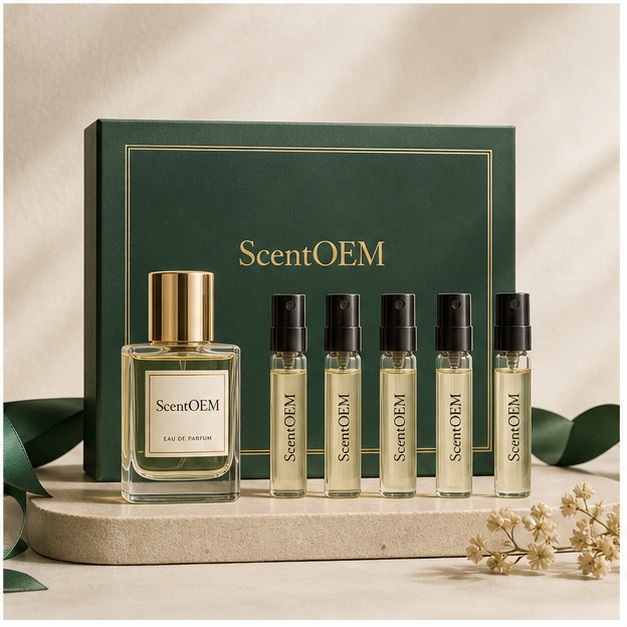
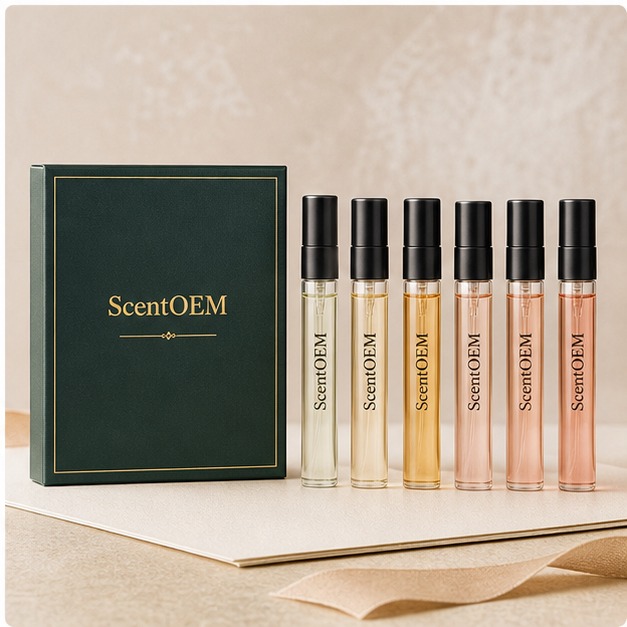
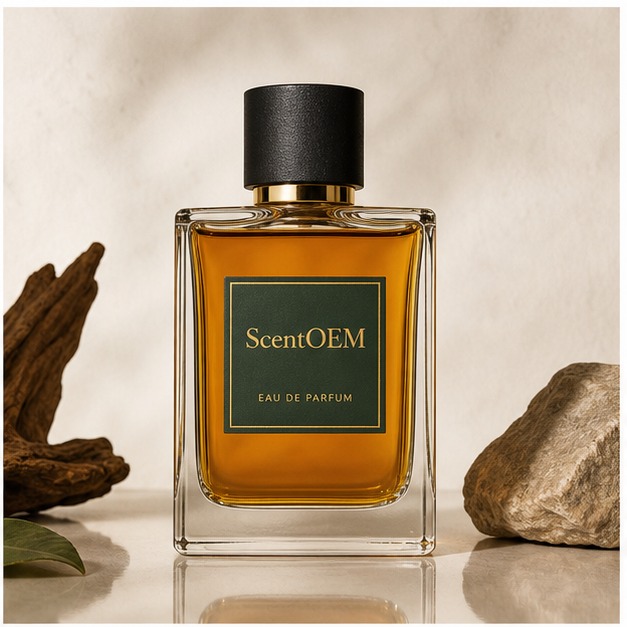
ScentOEM plans and coordinates B2B perfume projects: selecting a fragrance direction, scoping bottle and packaging components, arranging samples, identifying what drives MOQ and cost, and checking which documents are available for a given formula and destination market.
The work sits between a buyer's commercial requirement and production reality. The output of an inquiry is a defined project — what is being made, in what packaging, at what quantity, for which market, and which documents must be confirmed — so a quotation can be prepared against something specific rather than an assumption.
The registered entity is a trading company, and production runs through a partner facility rather than a plant under the same registration. That structure is stated here rather than left for a buyer to discover, because it changes which questions are worth asking: capacity and line ownership are confirmed against the production partner, while commercial terms, project coordination and documentation sit with the entity you contract with. A supplier that blurs the two is harder to verify, not easier.
| Registered entity | Shenzhen Dingyuefeng Trading Co., Ltd — Shenzhen, Guangdong, China. ScentOEM is the trading name used for its B2B fragrance sourcing work. |
|---|
| Business model | B2B perfume OEM/ODM, wholesale and private-label project planning |
|---|
| Commercial paths | Wholesale, private label, semi-custom fragrance, full custom development, packaging customization, discovery and sample planning |
|---|
| Product scope | EDP, EDT, extrait, perfume oil and attar, body mist, discovery sets, mini and travel formats, gift sets, reed diffusers, room sprays, scented candles |
|---|
| Production | Coordinated through a production partner facility. Facility imagery is shown on the trust evidence page; broader facility claims are made only against current documentation. |
|---|
| Primary contact | [email protected] |
|---|
How a Project Runs
Most sourcing friction comes from quoting before the project is defined. These stages exist to settle the decisions that actually move price, timing and feasibility.
1
Inquiry Review
Buyer type, destination market, product category, quantity and launch timing are captured. Missing inputs are named rather than assumed.
2
Path Selection
Wholesale, private label, semi-custom or full development is identified based on how much of the product needs to change.
3
Scope Definition
Fragrance direction, fill volume, bottle, decoration and packaging structure are settled, because these drive MOQ and cost.
4
Sample Review
Samples are reviewed against the agreed scope. Feedback rounds are expected and are part of the timeline, not a failure of it.
5
Documentation Check
Which documents are available is confirmed for the selected formula and destination market, before an order is planned.
6
Quotation & Production
Pricing, MOQ and timing are issued against a defined scope, then production, assembly and export planning proceed.
MOQ, production timing, sample timing, documentation availability, compliance and shipping feasibility are confirmed after the exact formula, bottle, packaging, quantity and destination market are reviewed. No fixed figure is published before that review, because a number given without scope is not a number a buyer can rely on.
Who This Is For
Different buyers need different depths of product selection, packaging review, sampling and documentation support. The starting point differs accordingly.
Markets Covered
Market pages describe the product directions and inquiry inputs that come up most often in each region. They deliberately avoid claiming market presence or client counts that cannot be evidenced.
Middle East
Oud, amber, musk, rose, attar and perfume oil, with premium gift presentation.
United States
Private label launches, ecommerce packaging, discovery sets and document checks.
Canada
Private label fragrance, sample review, clean packaging and documentation planning.
Latin America
Wholesale perfume, mixed SKU planning, gift sets and retail-ready packaging.
Southeast Asia
Travel sizes, social-commerce products, perfume oil options and trial formats.
Australia
Niche fragrance, private label projects, ecommerce launch kits and sample review.
The Claim Policy This Site Applies to Itself
Supplier websites routinely publish figures that cannot be checked: years in business, production capacity, client counts, certification lists and compliance guarantees stated as universal facts. Those numbers are easy to write and impossible for a buyer to verify at the inquiry stage.
This site applies a stricter rule to itself. A statement is published as fact only when current evidence exists for the exact scope it describes. Where evidence is scope-dependent, the statement is published as conditional and the condition is named.
|
| | Statement type | How it is handled here |
|---|
| MOQ, pricing and lead time | Published as the factors that determine them, never as a fixed figure before project review |
| Certificates and compliance documents | Availability confirmed per formula and per destination market; no universal compliance promise |
| Factory status and capacity | Stated only to the extent current documentation supports; imagery is presented as context, not proof |
| Customer names, logos and testimonials | Not published without explicit permission and current evidence — see buyer proof policy |
| Editorial authorship and corrections | Published under the transparent editorial and corrections policy; unverified personal credentials are not assigned |
| Market presence and client counts | Not published, because they cannot be evidenced to a buyer at inquiry stage |
This policy cuts both ways, and that is the point. A supplier willing to publish another buyer's brand without approval would publish yours the same way. The restraint applied to other projects is the restraint that will be applied to yours.
How to Verify a Supplier — Including This One
Buyers should not extend trust on the basis of a website. These are the checks worth running against any fragrance supplier, and the pages where the corresponding material is set out here.
- Ask which documents are available for your formula and your destination market, not in general — see quality and documentation.
- Ask what a certificate's scope actually covers, and match the named entity and expiry against your project — see trust evidence.
- Ask for a reference from a comparable commercial path, quantity band and destination market — see buyer proof policy.
- Ask what drives MOQ and cost on your specific scope before accepting a headline figure — see MOQ and cost guide.
- Require samples approved against a written scope before any bulk commitment — see sample process.
Working With Us
A useful first message names the buyer type, destination market, product category, rough quantity, fragrance direction, packaging needs, documentation requirements and target launch date. Missing inputs are the most common reason a quotation cannot be prepared.
The first reply summarizes fit, names what is still missing, and gives the next practical step — rather than a binding production promise made before the project is understood.
Do not send confidential formulas or proprietary artwork until a secure upload or NDA path is arranged.