
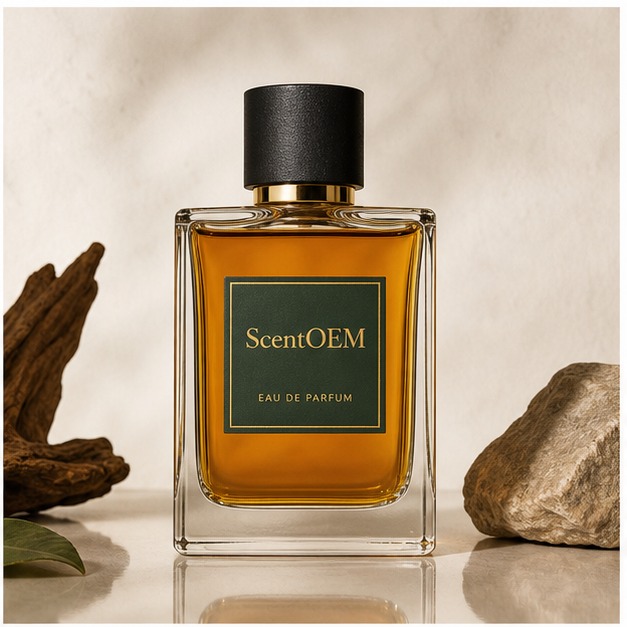
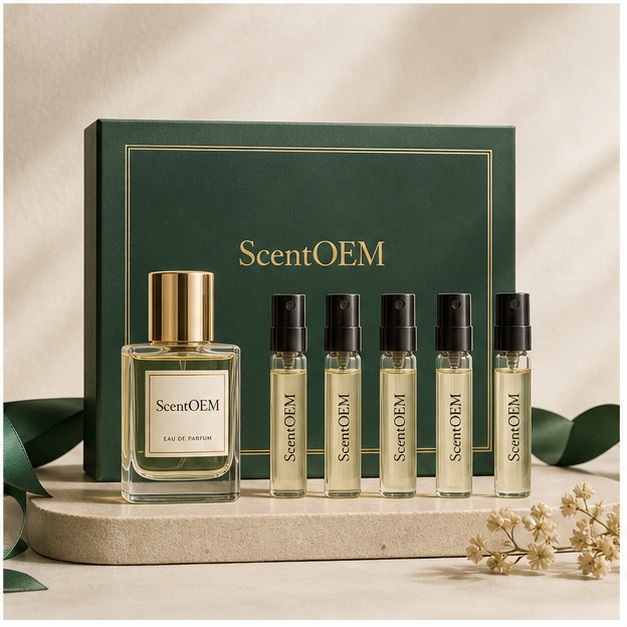
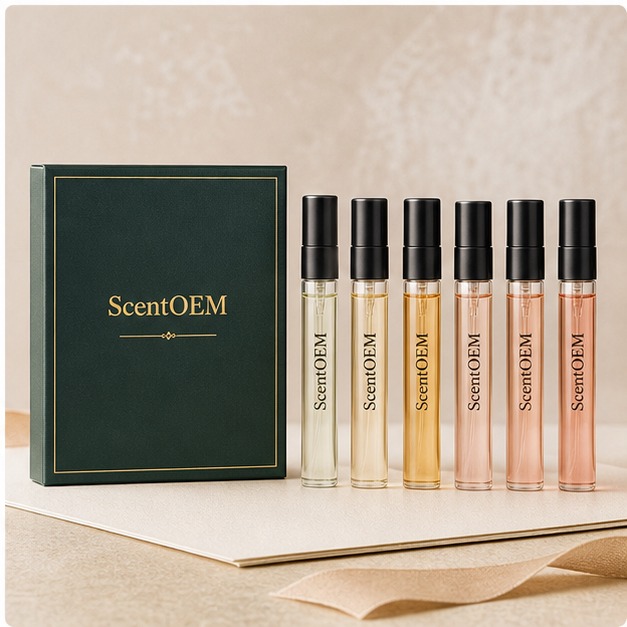
Quick answer
To start your own perfume line with a China manufacturing partner, define the customer and launch economics first, select private label or custom development, simplify the first product architecture, build a supplier brief, verify the production route, approve fragrance and finished packaging samples, assign destination-market responsibilities, and release production only after the specification and commercial terms are complete.
The first goal is not to create the largest collection. It is to launch a product the brand can finance, verify, sell and reorder.
Stage 1: define the brand problem before the perfume
Write a short positioning statement:
For [customer], our fragrance provides [experience or occasion] through [distinctive scent and brand direction], sold through [channel] at [price position].
This statement guides scent, bottle, carton, quantity and channel decisions. Without it, a supplier can send attractive options that do not form a coherent product.
Decide:
- target customer and wearing occasion;
- launch country and sales channel;
- retail price position;
- brand visual language;
- number of scents;
- full-size and sampling format;
- first-order cash limit;
- target launch window.
Do not use the factory catalog as the brand strategy. Use it to identify feasible ways to express an already defined strategy.
Stage 2: choose a manufacturing route
| Route | Best for | Main constraint |
|---|---|---|
| White label | Fast channel test | Low differentiation |
| Private label | Faster branded launch | Existing fragrance/component options |
| ODM/custom development | Signature scent and coordinated product | More decisions, revisions and testing |
| OEM/contract manufacturing | Buyer has an approved specification | Transfer accuracy and buyer readiness |
Many first launches benefit from a hybrid: a custom or carefully selected fragrance in a stock bottle with customized decoration and carton. This preserves brand character while avoiding a custom mold before demand is proven.
Read OEM, ODM, Private Label and White Label Perfume after publication for a detailed scope comparison.
Stage 3: design the first collection around cash exposure
Every additional scent, bottle size, color and carton version multiplies purchasing and inventory. A focused launch is easier to approve, manufacture and reorder.
A disciplined first architecture may use:
- one bottle size;
- a common bottle, pump and cap;
- one packaging structure;
- a limited number of scents;
- artwork variation instead of structural variation;
- a discovery format for customer sampling.
The right number of scents depends on the brand and channel, but each scent should have a distinct role. Avoid adding products only to make the collection look complete.
Stage 4: build a manufacturer-ready brief
Include:
- product format and concentration direction;
- scent family, mood, references and exclusions;
- units per scent;
- bottle size and packaging references;
- stock versus custom preferences;
- decoration and carton direction;
- destination market;
- required sample date and launch window;
- formula ownership or exclusivity expectations;
- document and shipping support required;
- approved budget boundaries or “To Confirm.”
Separate essential features from flexible features. A supplier needs to know whether the gold cap, rigid box or exact bottle shape is central to the brand or can change to support quantity and timing.
Use the custom fragrance brief guide after publication if the scent requires development.
Stage 5: shortlist and verify suppliers
Search visibility can help discover candidates, but it is not proof of production capability. Identify whether each candidate is a manufacturer, trader, sourcing partner or coordinated program.
Check:
- legal company and payment identity;
- actual production address;
- internal and outsourced processes;
- relevant factory and quality evidence;
- component-level MOQ;
- sampling scope;
- specification and change-control practice;
- destination and shipment experience;
- complaint and remedy terms.
Use How to Find a Perfume Manufacturer in China and the factory-verification guide after publication.
Stage 6: model the real first-order cost
Build a cash model rather than multiplying unit price by finished quantity.
| Cost layer | Include |
|---|---|
| Development | Briefing, fragrance samples, packaging prototypes |
| Product | Formula, bottle, pump, cap, decoration, carton |
| Setup | Printing plates, screens, fixtures, molds if any |
| Quality | Tests, inspection, retained samples |
| Documents | Formula, batch, market or freight files as applicable |
| Logistics | Export packing, dangerous-goods handling, freight, duty and local delivery |
| Inventory | Excess components, storage and damaged allowance |
| Launch | Photography, sampling, channel fees and customer acquisition |
Protect a contingency for revisions, component changes and freight movement. Do not spend the entire available budget on production inventory.
Stage 7: approve samples in the right order
Different samples answer different questions:
- fragrance direction samples;
- concentration or finished-liquid sample;
- component samples;
- decorated bottle sample;
- artwork proof;
- finished packaging prototype;
- representative pre-production unit.
Record formula codes, component codes and artwork versions. Consolidate feedback through one decision owner. Approve the scent and the finished package, not merely a fragrance strip.
The ScentOEM Sample Process Guide explains the approval sequence.
Stage 8: assign compliance and shipping responsibilities
The manufacturer may provide formula, batch and freight information. The brand, importer, distributor or responsible person may retain legal obligations in the destination market.
Before production, create a responsibility list for:
- ingredient and formula information;
- safety assessment where required;
- label and claims review;
- product notification or listing;
- responsible-person or importer duties;
- batch and complaint records;
- dangerous-goods classification and documents;
- freight booking and customs entry.
Do not accept “all certificates included” as a complete answer. Identify the exact documents and who reviews them. Use qualified regulatory and logistics professionals where required.
Stage 9: release production through a readiness gate
Mass production should begin only when these items are approved:
- contracting and manufacturing entities;
- final formula or fragrance code;
- concentration and finished-product specification;
- bottle, pump, cap and decoration;
- artwork and carton construction;
- representative sample;
- test and inspection plan;
- document responsibility;
- quantity and excess-component treatment;
- timeline start conditions;
- payment, Incoterm and shipping route;
- ownership and change-control terms.
Anything unresolved should appear as an accepted written condition, not an assumption.
Stage 10: prepare the reorder before the launch
Ask what will happen if the product sells faster than expected. Confirm normal reorder quantities, component lead times, fragrance continuity, retained samples, substitution rules and storage of excess packaging.
Also create a batch-feedback process. Track leakage, spray performance, breakage, packaging damage, customer scent feedback and returns. These records improve the second order and provide real evidence for future product decisions.
A practical 90-day planning sequence
The exact schedule depends on product and approvals, but the work can be organized into three phases:
Days 1–30: define and shortlist
- positioning and product architecture;
- manufacturing route;
- project brief;
- initial supplier screening;
- indicative feasibility and cost structure.
Days 31–60: sample and verify
- fragrance and component sampling;
- factory and entity evidence;
- packaging and artwork development;
- responsibility and document mapping;
- quotation normalization.
Days 61–90: approve and prepare
- representative sample;
- compatibility and quality plan;
- final commercial documents;
- production-readiness review;
- launch and reorder preparation.
This is a planning framework, not a promised manufacturing lead time. Custom tooling, multiple revisions or market work can extend the schedule.
How ScentOEM supports new fragrance brands
ScentOEM works as a B2B sourcing and project-coordination partner. It can help founders structure the brief, identify an appropriate production route, coordinate supplier questions and prepare approvals. It does not guarantee that every concept is feasible at every quantity.
Start with Perfume Brand Startups, the How to Start a Perfume Brand Guide and Private Label Perfume, then submit a project request.
Frequently asked questions
How much money do I need to start a perfume line?
There is no reliable universal figure. Cost depends on development, quantity, formula, concentration, bottle, decoration, carton, testing, documents, freight and launch activity. Build a project-specific cash model.
Should a startup create a custom fragrance?
It can, if differentiation justifies the added development, ownership and testing work. Private label may be more suitable when the first priority is validating demand.
How many perfumes should I launch first?
Choose the smallest collection that communicates the brand clearly and supports the sales channel. Each additional scent creates another formula, sample, filling and inventory decision.
Can the manufacturer design my brand?
Some suppliers provide design support, but the founder should retain a clear brand strategy and approve all source files, rights and versions.
When should I begin regulatory review?
Begin during product definition, not after production. Destination, formula, label, claims and responsible-party work influence the project before release.